


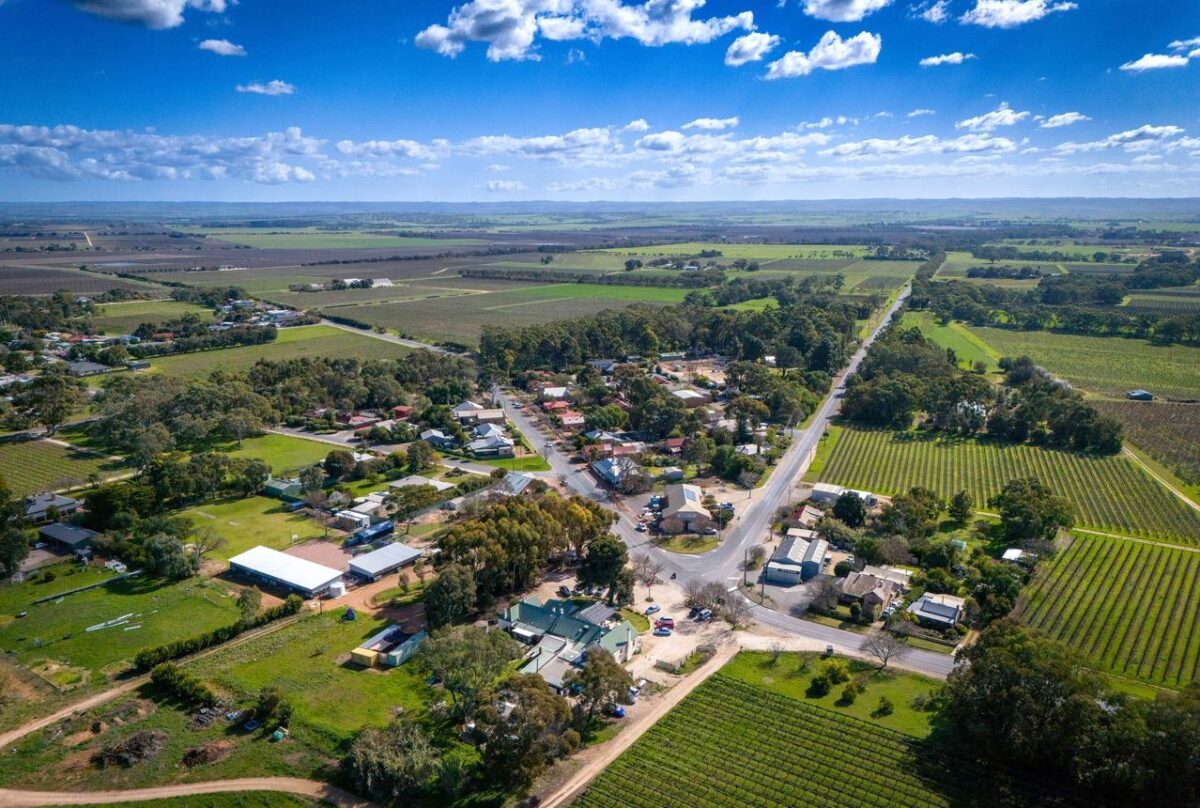
Langhorne Creek is entering “a new era of growth”, emerging as a diversified food, wine and agritourism destination while building on more than 175 years of winemaking heritage.
The Langhorne Creek Wine Region says the district is proactively responding to changing global market conditions by embracing new opportunities in horticulture, food production, agritourism, alternative beverages and mixed enterprise agriculture.
Chair of Langhorne Creek Grape & Wine Tom Keelan said the region’s transformation reflected a long history of innovation and adaptation.
“Langhorne Creek has always evolved with changing agricultural markets,” he said.
“Now we’re seeing the next chapter of that story unfold.”
“Wine remains central to our future, but we’re also seeing exciting growth in vegetables, flowers, alternative beverages, tourism experiences and food production.
“This isn’t a story of decline, it’s a story of diversification, resilience and opportunity.”
Recent years have seen some vineyard land transition to vegetables, turf, flowers, livestock and specialty crops, supported by the region’s fertile soils, favourable climate and secure water resources.
An estimated 1,500 to 2,000 hectares of vineyards have been removed or are not currently in production.
“We have all the ingredients needed for long-term growth: affordable land, reliable water, fertile soils, proximity to major population centres and an innovative farming community,” Mr Keelan said.
“Few regions can match our combination of natural advantages.”
A key strength underpinning the region’s future is its water security.
Langhorne Creek benefits from multiple water sources including River Murray water delivered through the community-owned Creek Pipeline Company network, groundwater resources, Lake Alexandrina and local river systems.
The region has received full water allocations for the past decade, providing confidence for growers and investors alike.
The region’s agricultural diversification is already attracting attention from industry leaders.
Vegetable grower and Eskadale Vineyards owner David Knight said Langhorne Creek’s water security, soil diversity and affordability positioned it strongly for future growth.
“Langhorne Creek’s uniqueness is having flexible water supply from multiple sources, which very few regions can match,” Mr Knight said.
“The majority of the region is suitable for horticulture and agriculture, and land remains excellent value compared with many competing production regions.”
Langhorne Creek’s wine industry continues to evolve and innovate.
Known for Shiraz, Cabernet Sauvignon and Malbec, producers are also embracing alternative varieties including Fiano, Greco, Nero d’Avola, Montepulciano and Sangiovese, alongside new winemaking techniques and sustainability initiatives.
Bleasdale vineyard manager Sarah Keough said adaptability had always been one of the region’s strengths.
“I think a real benefit for Langhorne Creek as a region is that it’s very quick to adapt,” he said.
“Whether that’s adapting to oversupply by removing vines, trialling new varieties or exploring new wine styles, we just get on and do it.
“This is very fertile land and a great place to grow grapes, vegetables or anything really.”
Tourism is also evolving beyond traditional cellar door experiences.
New attractions including flower farms, roadside produce stalls, pick-your-own experiences, cycling opportunities, food experiences and alternative beverages are broadening the visitor offering.
The planned Langhorne Creek Discovery Trail will further connect wineries, producers, cultural sites and natural attractions.
Pecador Produce owner Jordan McAnaney believes the region is uniquely positioned to become a leading food and agritourism destination.
“We’re an hour from Adelaide. We’ve got farmers and growers and roadside stalls and restaurants and cafes,” Mr McAnaney said.
“Langhorne Creek is becoming South Australia’s food bowl.”
Mr Keelan said the region’s transformation was creating significant opportunities for investment, tourism and regional development.
“Langhorne Creek offers something increasingly rare – secure water, productive land, affordable operating costs and room to grow,” he said.
“We’re proud of our wine heritage and excited about our future.
“Wine will always be at the heart of Langhorne Creek, but our region is evolving into an even stronger food, wine and agritourism destination.”