


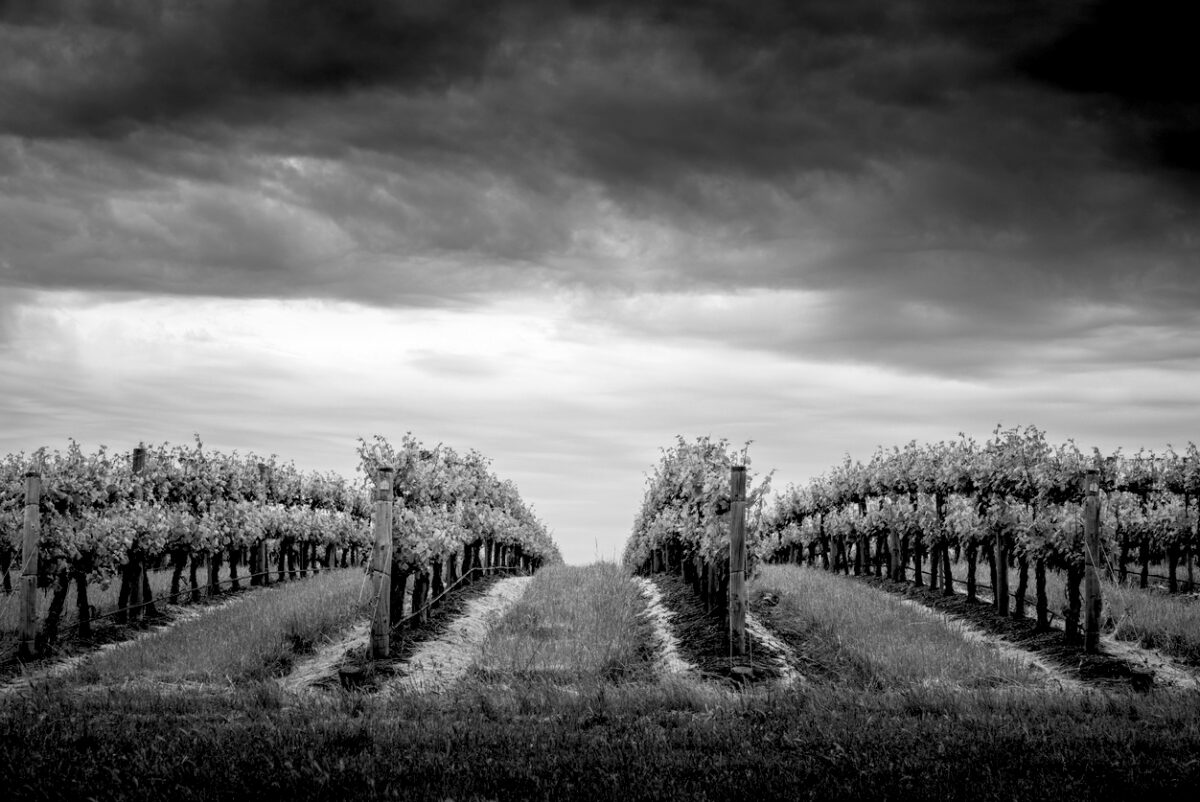
And so begins an uncontrolled, unstructured restructure of the national vineyard – which will exacerbate the industry crisis. Wine industry analyst Paul Clancy reports.
The failure of the wine industry to address its supply/demand imbalance in any worthwhile way, let alone in a coordinated and collaborative effort by its various sectors, means that an uncontrolled random vine pull will occur – in fact it has already started.
Five of the largest family owned vineyards in Loxton and Waikerie have already bowed out of the industry.
These were the most efficient growers who produced tens of thousands of tonnes of high quality fruit.
But the oversupply across the national vineyard in all regions crashed grape prices and made these enterprises unviable.
They were the quality growers the industry can ill-afford to lose.
And before this loss is dismissed as “probably a good thing as commercial grapes and wine are the bulk of the oversupply” – take a look at the wine lists of the bulk wine brokers.
The wine lake comprises millions of litres from the premium regions. It is not only a commercial wine oversupply.
This unstructured restructure of the national vineyard is likely to compound the current industry ‘crisis’ rather than address it.
It has the risk of creating critical shortages and maintain unwanted surpluses of certain varieties from certain regions.
It’s hard not to think that the industry suffers from a Pythonesque Dead Parrot Syndrome.
For more than 20 years it has continued to operate, like an ostrich with its head in the sand, as though nothing could or should be done about a 30 percent supply-demand imbalance which was clearly looming as early as 2003.
Those most severely affected by the Dead Parrot Syndrome were the industry influencers and leaders who dismissed the imbalance as merely a “cyclic blip” they had all experienced before and that in any case “market forces” would provide any correction needed.
Leadership folly
History has revealed the folly of that sort of leadership.
Seventeen years ago, in 2009, Chris Byrne and I co-authored a report titled The Chifley Report which called for a coming together of both the wine producing and grapegrowing sectors to formulate a plan for a whole of industry reform and restructure – including a carefully researched and controlled structural adjustment of the national vineyard, with the aim of removing 500,000 tonnes of fruit from the market.
The Report cited detailed examples where other industries such as Dairy, Citrus, Forestry and Fishing had achieved significant success in arresting decline through a whole of industry collaboration – mostly industry self-funded. But the Report was largely dismissed with the “cyclic blip” response.
The Chifley Report commented “If the oversupply is a cyclic Canadian Barn Dance where supply and demand met only periodically to dance together, then currently, supply and demand are so far apart they are in separate dance halls.”
The immeasurable losses of assets and wealth, the personal pain and emotional distress and the damage to so many regional communities, caused through the failure to act, as the Report urged, in an urgent, timely and industry wide collaboration, is more than regrettable.
It is a tragic testament to apathy and the absence of strong leadership – at so many levels.
It could be explained to some degree by accepting that the “wine industry” is not a single entity, it’s a beast made up of so many different pieces, small and medium enterprises, public companies, agriculturists and scientists, marketers, tourism operators and dreamers, many with diverse and conflicting interests.
When the smoke dissipates from the ashes of this industry Armageddon in the years ahead, it would be prudent to make an effort to tame that beast, to resurrect the dead parrot and restructure so the industry can have a profitable future for all its players and prevent even harmless cyclic blips.
It could do well to adopt value chains so that all facets of the wine industry operate more collaboratively and in sync.
Value chain management is about building relationships and efficiencies across the links from growers to the consumer, listening to one another and adopting methods, practices and technologies to deliver the most competitive wine to customers, especially in export markets. It’s best practice, it’s about winning. The grape and wine industry has wilfully neglected opportunities to advance, evolve and grow.
Value chain practices were enthusiastically suggested to SA winemakers and grapegrowers way back in 2005 by the State’s then Thinker In Residence, Prof Andrew Fearne.
The beast with rag ears
Unfortunately, he was talking to the beast with rag ears.
And all this of course leads to the crisis of industry funding.
Diminishing production – of winegrapes and wine – reduces levy income, so vital for the management of the industry, marketing and research.
By far the largest proportion of industry levy funds comes from the commodity/commercial wine and winegrape sector (the much despised warm inland regions).
The reduced levy returns from the biggest industry sector as it removes vines and lowers production, is a critical issue for the industry.
Is it not time for a change in the methodology of levy raising from a volumetric to an ad valorum one?
That would be a more equitable levy and would raise more funds.
And while talking tax, maybe it’s time to shine a light on the number of wine producers who continue to produce wine, adding to the oversupply, because they survive on the WET tax rebate.
Given the issues confronting the industry it’s to be hoped that the parrot is not dead – merely resting before the brewing storm of uncontrolled vineyard restructure and the task ahead.