


Siobhan Wigan, executive officer of Sustainable Winegrowing Australia, responds to recent letters in The Week That Was newsletter raising concerns about the program.
I’ll be honest; reading the recent letters in The Week That Was regarding Sustainable Winegrowing Australia while disheartening, wasn’t surprising.
The industry is in a dire state.
An industry I have lived and breathed for over twenty years.
Up until a few months ago, I wasn’t in this role as executive officer for Sustainable Winegrowing Australia, I was a winemaker in the Barossa.
I still live there.
I have seen the fruit hanging on the vines long after the leaves have dropped.
I have seen the vines coming out altogether.
I have looked growers in the eye during the hardest vintages in memory.
And I have lived the same financial and administrative pressures that Anonymous, Maggie Jarrett and Michael Hart have laid bare.
Right now, when every dollar and every hour counts, questioning the return on investment of any fee or audit isn’t just fair, it’s good business.
It’s also a conversation that we need to be able to have at any point in time, not just every three years upon renewal.
I couldn’t agree more with Maggie’s crucial point that for any sustainability program to work, growers must be at the table designing it, not just paying the invoice.
When Sustainable Winegrowing Australia was established in its current iteration in 2019, it was built with direct input from growers and winemakers.
Today, we have strengthened its governance to ensure genuine industry input continues.
Amongst our recently appointed Advisory Board are Chris Dent and Jeremy Cass, who live the reality of running vineyards every day.
Alongside the rest of the Advisory Board, they have a direct mandate to shape the strategic direction of the program, hold us to account on costs, strip out unnecessary complexity, and ensure Sustainable Winegrowing Australia is run for the industry, not imposed upon it.
In addition, the AWRI Helpdesk fields approximately 3,000 enquiries each year from Sustainable Winegrowing members with feedback used to inform improvements to the Program.
Michael’s experience of being locked out of wine tenders despite holding Certified Organic status highlights that markets are shifting to demand more than environmental stewardship; social responsibility is increasingly important.
The challenge is that major domestic and international retail buyers are progressively writing whole-of-business ESG mandates into their tender rules, requiring a single national framework like Sustainable Winegrowing Australia as a baseline condition of entry.
While I agree with Anonymous that certification will never guarantee the sale of your fruit in an oversupplied market, Michael’s experience shows that it is becoming a non-negotiable condition for market access.
Sustainable Winegrowing Australia cannot single-handedly fix the global oversupply of grapes, and I will never pretend that a certificate is a silver bullet that guarantees a fruit contract in a depressed market.
However, what Sustainable Winegrowing Australia is doing, more than ever before, is protecting and unlocking market access (for both the grower and the winery).
Nobody gets into growing grapes or making wine because they love paperwork and audits.
We do it because we care about our land, our communities, and leaving the legacy of healthier vineyards to the next generation.
And ultimately, we just want to grow and make good wine.
As Maggie rightly points out, you have to be profitable to be sustainable.
So, as well as making good wine, we need to be able to sell it.
The initial motivation for a producer engaging with the Program may be meeting market requirements and customer expectations, however, participation can lead to strengthening the long-term sustainability of your business.
The Program offers an opportunity to drive continuous improvement, reduce environmental impacts, improve operational efficiencies and realise financial benefits.
We recognise that participating in the Program involves a commitment of time and administration, however, we encourage all participants to look beyond the reporting requirements and explore the opportunities the Program offers to add real value to their businesses.
We know our members are doing some amazing things already, and we are proud to showcase some of them here.
We encourage all Sustainable Winegrowing Australia members exploring interesting sustainability initiatives to share their story here.
My commitment to you, as someone who has just stepped out of a winery to lead this next chapter of Sustainable Winegrowing Australia, is that my door is open.
If the process is letting you down, pick up the phone or send me an email at executive@sustainablewinegrowing.com.au and tell us what isn’t working so we can address the issue together.
So, let’s continue to build a national program that genuinely backs the people in the vineyard and the cellar to manage their impacts, while still opening doors with buyers across the globe.
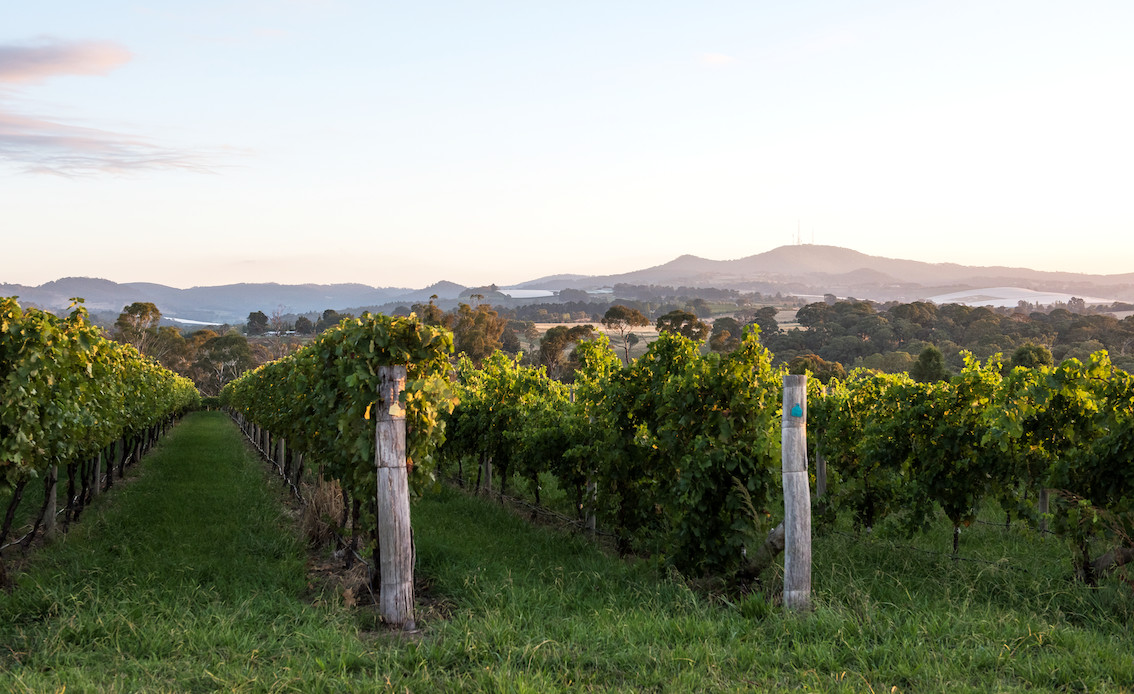
Photograph: Swinging Bridge Vineyard. Used for illustration purposes only.