
Matthew McCulloch, managing director of Langmeil Winery in Tanunda, reports on the state of Australian wine in the United Kingdom.
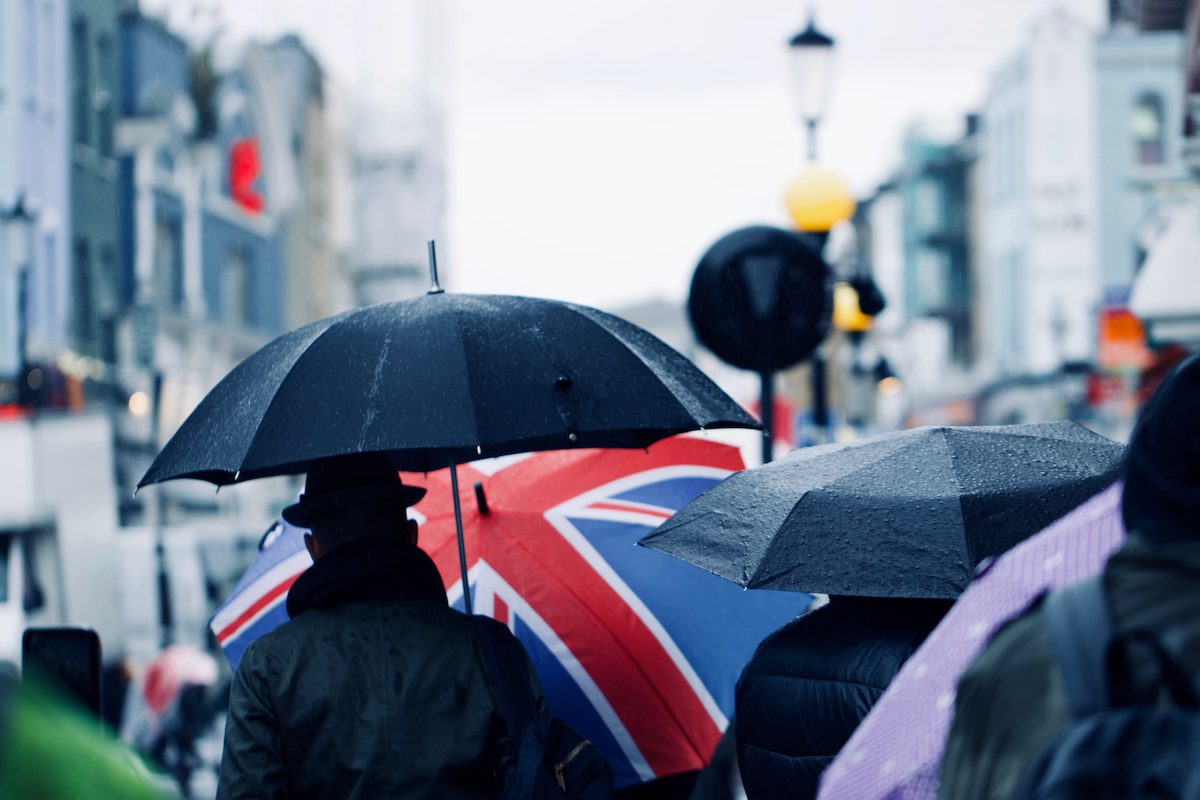
I’m back under a blue sky and the warmth of Barossa after two weeks in the cold (the temperature didn’t crack double figures), dark and wet of the UK and Ireland (London, Manchester, Edinburgh, Belfast and Dublin), so I thought I’d send you an update about the UK state of play.
The UK is Australia’s largest export market by volume (194m L, -9%) and second largest by value ($343m, -3%) for the year ending December 2025.
91% of the volume is exported in bulk.
The top five exported varieties by value are Shiraz, Chardonnay, Sauvignon Blanc, Merlot and Pinot Grigio (62%).
South Eastern Australia accounts for 85% of volume (165m L, -8%) and 64% of value ($217.9m, -2%).
Barossa (Barossa Valley, Eden Valley and High Eden) is the number one GI by value ($17.7m, +11%), followed by Margaret River ($7.4m, +16%).
Australia is number one in the UK off-trade and number four in the on-trade.
The top-selling varieties by value in the off-trade are Chardonnay, Shiraz, Pinot Grigio, Merlot and Sauvignon Blanc (76%).
2025 was a challenging year, marked by a new duty calculation system that disproportionately taxed wines by alcohol by volume.
Alcohol duty rose 3.66% in February 2026, pushing the UK to the top of Europe’s wine tax league and adding fresh pressure on pubs, producers, and consumers alike.
A 14.5% wine now attracts £3.33 duty plus VAT at 20%, so £4.00 or AUD 7.70 per bottle (17.2.26).
Increased employment, energy and food costs, and reduced rate relief drove price increases.
Lingering cost-of-living pressures, coupled with constrained consumer spending, have resulted in on-premise visitation remaining flat and spend per visit increasing only due to inflation.
A gradual erosion of disposable income is expected to constrain consumer confidence and limit discretionary spending.
A beer tap labelled ‘Rachel Thieves’ appeared in The Green Dragon pub in Flaunden, protesting Chancellor of the Exchequer Rachel Reeves’ tax hikes.
The previous broad‑based premiumisation trend is fragmenting, with consumers still trading up but only when value is clear, making them more selective in category and brand choice.
Many drinkers are moderating rather than abstaining, with fewer drinking occasions, higher average spend per occasion, and more interest in ‘drink less but better’ at home and in venues.
Health and wellness concerns, along with cost pressures, are driving growth in low‑ and no‑alcohol segments in both off‑ and on‑trade, especially beer, although growth in no‑alcohol wine and spirits has begun to slow.
Value for money, clear quality cues and trusted brands matter more than ever as consumers scrutinise alcohol spend.
Opportunities lie in at‑home premium experiences, low- and no-alcohol options, smaller pack sizes (AVL’s Poco Vino), and digital channels that make comparison and discovery easy.
Online remains important for the off‑trade, with consumers using it to compare prices quickly and make price‑driven wine purchases.
Standard beer, RTDs and affordable but ‘quality’ wines are relatively better positioned than higher‑ABV, heavily taxed spirits.
The mood in the wine trade (courtesy of Fraser McGuire, commercial director of Berkmann Wine Cellars) was, to paraphrase Admiral James Stockdale, that you must retain faith that you will prevail in the end, regardless of the difficulties, while confronting the brutal facts of your current reality, whatever they might be.
Related content
















Recent Comments