
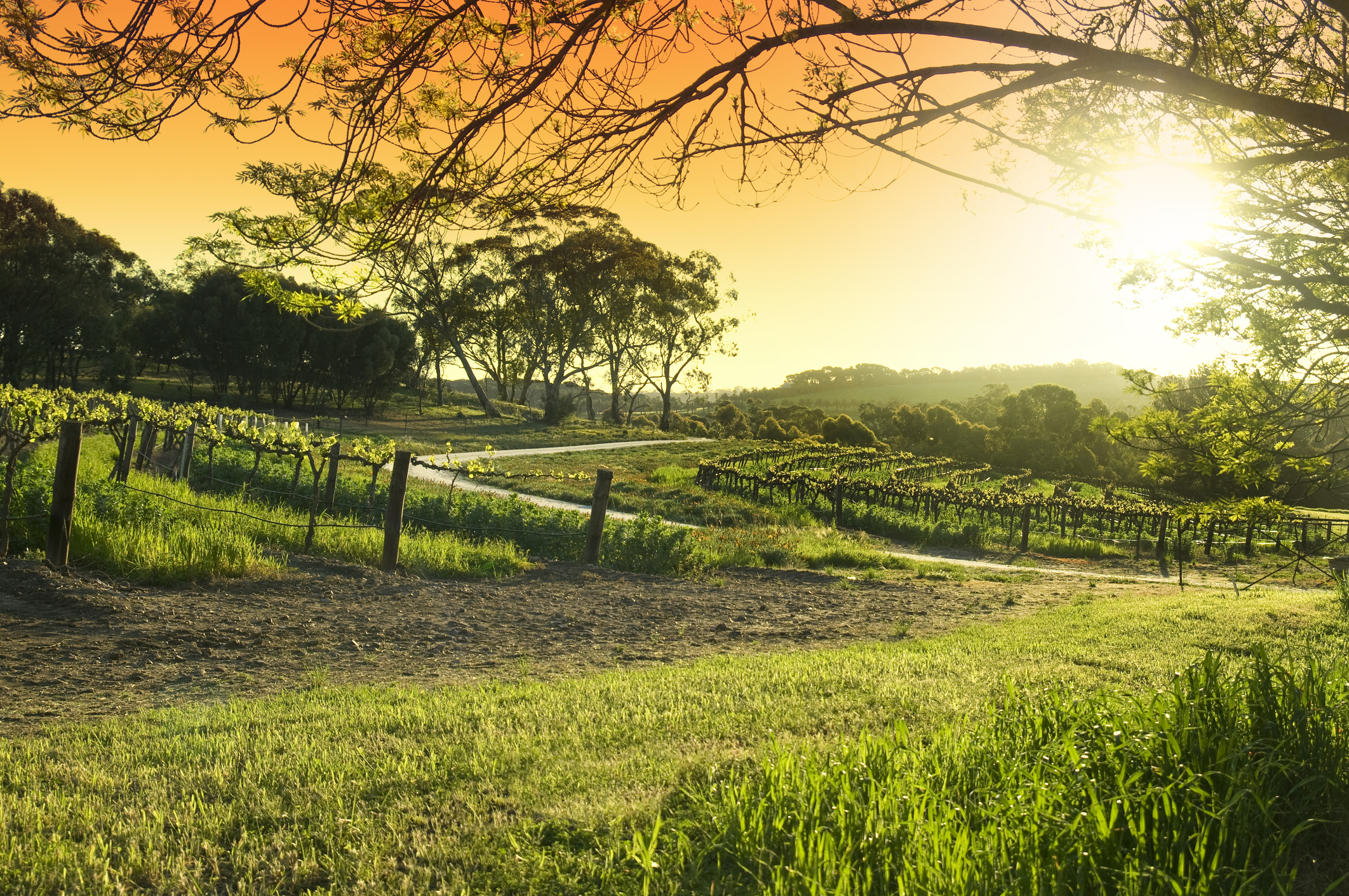
The Barossa Valley – despite being one of Australia’s premium wine regions – is one of the best-value vineyard markets globally, especially for buyers looking for scale and production volume, according to Knight Frank’s landmark 20th edition of The Wealth Report.
The Barossa Valley and Eden Valley have been named as regions to watch in Australia for the ‘trading up’ trend where quality over quantity is the wine industry’s new mantra.
Knight Frank’s Global Vineyard Index, which offers a distinctive perspective on the price of vineyard land around the world, found US$1 million buys 18.18 hectares of land in the region, the greatest amount of land of the regions examined.
The cost of land in the Barossa Valley was US$55,000 per hectare at the end of 2025 following a 10 percent reduction over the year, which makes it the most affordable wine region.
Stellenbosch in South Africa was the next most affordable, at $US60,000 per hectare, while Italy Piedmont (Barolo) was the most expensive of the regions included in the index, at $US2.7 million per hectare.
The average price of vineyard land
Piedmont (Barolo) – US$2,700,000 per hectare (US$1 million buys 0.37 hectare)
Champagne (Côte de Blancs) – US$1,900,000 per hectare (US$1 million buys 0.53 hectare)
Bordeaux (Margaux) – US$1,650,000 per hectare (US$1 million buys 0.61 hectare)
Tuscany (Brunello di Montalcino) – US$1,200,000 per hectare (US$1 million buys 0.83 hectare)
Tuscany (Bolgheri) – US$1,200,000 per hectare (US$1 million buys 0.83 hectare)
Napa Valley (Rutherford) – US$1,170,000 per hectare (US$1 million buys 0.85 hectare)
Burgundy (Côte de Nuits Red) – US$1,050,000 per hectare (US$1 million buys 0.95 hectare)
Loire (Sancerre) – US$300,000 per hectare (US$1 million buys 3.33 hectares)
Oregon (Dundee Hills) – US$270,000 per hectare (US$1 million buys 3.70 hectares)
Tuscany (Chianti Classico) – US$245,000 per hectare (US$1 million buys 4.08 hectares)
Essex – US$120,000 per hectare (US$1 million buys 8.33 hectares)
Marlborough – US$120,000 per hectare (US$1 million buys 8.33 hectares)
Kent & Sussex – US$110,000 per hectare (US$1 million buys 9.09 hectares)
Stellenbosch – US$60,000 per hectare (US$1 million buys 16.67 hectares)
Barossa Valley – US$55,000 per hectare (US$1 million buys 18.18 hectares)
“If production volume is your priority, Australia and South Africa stand out, offering 16 to 18 hectares for a US$1 million budget,” according to the report.
“Further up the list, both the UK and New Zealand still deliver solid value, providing around eight to nine hectares.
“As we progress through the US and into the prestigious vineyards of Italy and France, your money buys less land, but the trade-off comes in the form of higher-value output.
“In regions such as Napa Valley, Tuscany and Burgundy, US$1 million will still secure around one hectare of vines with bragging rights attached.
“But here’s the twist: look more closely at Burgundy and while US$1 million may buy a hectare in certain parts of the Côte de Nuits, in the rarefied parcels designated Grand Cru you would be fortunate to acquire 0.02 hectares.
“That’s just 200 square metres, or a plot measuring around 14m by 14m. Transactions in these areas are few and far between.”
Barossa and Eden Valleys regions to watch for the ‘trading up’ trend in the global wine industry
According to The Wealth Report, despite persistent headwinds, the vineyard market is far from being in decline.
But there are forces reshaping the global wine production map, and creating exciting opportunities for forward-looking winemakers and investors.
The research identifies five trends impacting the global wine industry, with the Barossa Valley and nearby Eden Valley named as regions to watch in Australia for the ‘trading up’ trend’, where quality over quantity is the wine industry’s new mantra.
While overall global consumption of wine is falling, values are rising, with drinkers increasingly choosing higher-quality, artisanal and terroir-specific wines, rather than mass-market bottles.
“Those vineyards with a strong narrative story focusing on provenance and craftsmanship are best placed to differentiate themselves,” the report says.
“Regions that best align with this trend include some of the world’s wine powerhouses, where opportunities to acquire vineyards are extremely rare.
“Champagne is the industry’s premiumisation engine, with unrivalled collective brand strength driven by occasion‐led demand.
“For the investor, scarcity beats scale.
“Vineyards in the top regions such as Champagne and Bordeaux are where the worlds of luxury brands and commercial winemaking overlap, creating a highly resilient asset class.
“However, the New World also offers opportunities for those looking to tap into the premiumisation trend. Oregon’s Willamette Valley delivers Burgundy‐adjacent appeal at lower absolute prices, while Australia’s Barossa and Eden Valleys produce some of the world’s most iconic wines.”
Knight Frank Australia Partner, Agribusiness Jason Oster said the Barossa Valley’s recognition in Knight Frank’s latest Wealth Report as a wine region to watch, reaffirmed its reputation as one of the world’s great wine-producing areas.
“With more than 175 years of winemaking history and home to some of the oldest producing vines in the world, the Barossa Valley continues to attract interest from high-net-worth-individuals seeking a combination of agricultural investment, lifestyle appeal and long-term capital preservation,” says Jason.
“The region’s world-class vineyards and generational wine estates are tightly held, but there is plenty of capital looking to invest.
“The Barossa Valley offers a great value proposition with large vineyard scale for comparatively low capital outlay, and strong growth prospects, especially for those that are looking to make the most of the premiumisation trend.
“Australia’s winemakers continue to struggle with oversupply and the shift in consumer tastes towards lighter wines.
“But for those who are pursuing premiumisation strategies, focusing on higher quality regional wines, like Barossa Valley, and offering consumers unique provenance and storytelling, often through cellar-door sales, will thrive and weather the storm.
“Although there has been some downward pressure on vineyard returns, there is optimism within the market for those with premium product.”
Five trends impacting the global wine industry
Trading Up
While overall global consumption of wine is falling, values are rising, with drinkers increasingly choosing higher-quality, artisanal and terroir-specific wines, rather than mass-market bottles. Vineyards with a strong narrative story focusing on provenance and craftsmanship are best placed to differentiate themselves. Regions that best align with this trend include some of the world’s wine powerhouses, where opportunities to acquire vineyards are extremely rare. However, the New World also offers opportunities for those looking to tap into the premiumisation trend.
Climate change
Rising temperatures, extreme weather events and unpredictable seasons are reducing yields and altering grape quality in some winemaking regions. Tasmania is a region to watch here as vineyards at higher altitudes or cooled by coastal breezes in the southern hemisphere are coming to the fore.
Changing tastes
The way people drink wine is changing and this offers potentially the most exciting opportunities for vineyard investors looking to add to their portfolios. In terms of creating wines to satisfy changing palates, a number of areas of Europe once considered peripheral for premium winemakers are now in the ascendancy.
Sustainability
Ethical consumption, driven by environmental and social responsibility, is now a major purchasing motivation, particularly for younger drinkers. Regions of the world that offer great sustainability stories include South Africa’s Cape South Coast with its heritage vineyards and community-led sustainability stories.
Experiential consumption
The vineyard tour is not a new phenomenon, but experiential consumption is moving beyond wine tourism and can help shape long‐term consumer habits reflecting broader lifestyle shifts. Wine, however, is just one of the things competing for consumers’ experiential spend; regions that deliver immersive hospitality, education and place‐based storytelling will capture margin and loyalty, even as routine consumption declines.
• Subscribe to the beautiful printed edition of WBM – Australia’s Wine Business Magazine here.










Recent Comments